

How to Use Victoryfr MDH TDS for High-Filled EVA HFFR
High-filled EVA HFFR compounds can become difficult to process when mineral loading increases. Dispersion may worsen, extrusion pressure may rise, and it can become harder to maintain elongation.
In this situation, the magnesium hydroxide (MDH) Technical Data Sheet can help determine whether a surface-treated grade is worth testing.
Victoryfr’s VB-3CH-A provides one example. Its TDS specifies a D50 of 2.8–3.5 μm, MgO of 58–60%, Loss on Ignition ≥28%, moisture ≤0.5%, and 1.50% stearic-acid coating.
For high-filled EVA HFFR, TDS data is most useful when it helps connect a specific formulation problem with the next material trial.
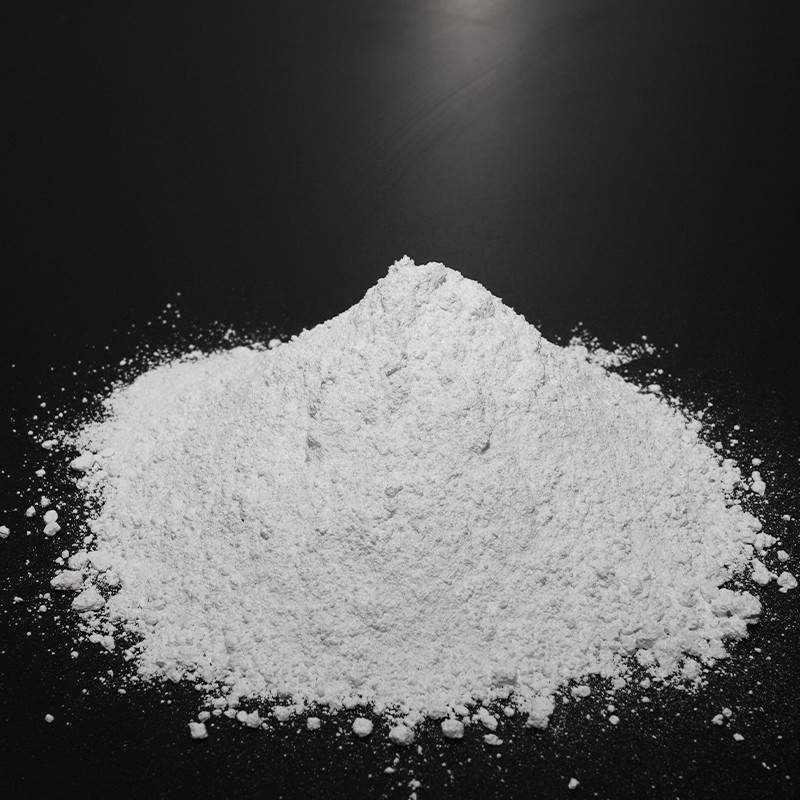
Why High-Filled EVA May Need a Different MDH Grade
EVA is widely used in flexible halogen-free cable compounds. High mineral loading, however, can make compounding and extrusion more demanding.
Common problems include:
● uneven filler dispersion;
● increased mixing torque;
● unstable extrusion pressure;
● reduced elongation;
● difficulty maintaining a smooth cable surface.
A grade may meet the required chemical specification and still behave differently in a specific EVA resin.
For this reason, MDH selection should move beyond purity alone. Particle characteristics and surface treatment become useful variables when the current formulation reaches a processing limit.
What the VB-3CH-A TDS Tells You Before a Trial
VB-3CH-A is listed for HFFR and PVC cable jacketing and insulation. Its TDS gives several useful reference points before formulation testing.
TheD50 range of 2.8–3.5 μm defines the grade’s median particle-size range. Moisture is controlled at≤0.5%, providing a clear incoming-material specification.
The most relevant feature for this EVA application is the 1.50% stearic-acid coating.
Surface treatment changes the interaction between the mineral surface and the polymer matrix. In EVA/PE/MDH systems, different surface modifiers can affect filler dispersion and interfacial behavior.
This does not mean that a coated MDH will improve every EVA formulation. It means surface treatment becomes a specific variable that can be tested when the current material shows dispersion or processing limitations.
When Is Surface-Treated MDH Worth Testing?
Poor Dispersion at High Filler Loading
If the compound shows visible agglomeration, uneven filler distribution, or unstable mixing, surface treatment is one area to investigate.
The first trial should keep the EVA resin and filler loading unchanged. This makes it easier to identify whether changing the MDH grade affects dispersion.
Rising Torque or Extrusion Pressure
Higher filler loading can increase resistance during mixing and extrusion.
If torque or pressure moves outside the normal production window, the MDH-polymer interface should be reviewed together with filler loading and process conditions.
A surface-treated grade can be included in the trial. Its effect should be measured on the actual compounding and extrusion equipment.
Loss of Elongation or Flexibility
Flexible cable compounds also need to maintain mechanical performance.
If elongation falls as MDH loading increases, filler distribution should be checked together with the resin and additive package.
A better-dispersed mineral system may support a more workable balance between filler loading and mechanical properties, but the result must be confirmed in the target formulation.
How to Run a Controlled EVA Trial
A useful TDS-based trial should change as few variables as possible.
Start with the following sequence:
1. Keep the EVA resin unchanged.
2. Keep filler loading and the additive package unchanged.
3. Replace only the MDH grade in the first trial.
4. Record torque or pressure, dispersion, cable surface, tensile strength, and elongation.
5. Run the required flame and smoke tests after the processing comparison.
If processing improves but another property still needs adjustment, dosage or formulation changes can be tested in a second round.
Victoryfr can use these trial results to support decisions on particle specification, surface treatment, dosage, and formulation direction. Once the trial grade is confirmed, repeat batches can be checked against the approved TDS specification before purchasing volume increases.
How Victoryfr Supports Grade Selection
A high-filled EVA formulation should be matched to an MDH grade based on the actual processing problem, rather than on one TDS value alone.
Before recommending a trial direction, Victoryfr can review information such as:
● EVA resin type;
● current MDH grade;
● filler loading;
● extrusion temperature;
● dispersion or processing problem;
● required mechanical properties.
For formulations where poor dispersion or filler-polymer interaction is the main issue, a surface-treated grade such as VB-3CH-A can be included in the trial. Its TDS specifies 1.50% stearic-acid coating, D50 of 2.8–3.5 μm, and moisture ≤0.5%.
If particle size, surface treatment, or dosage needs further adjustment after the first trial, these variables can then be reviewed against the actual extrusion results.
FAQ
What TDS parameter should be checked first for high-filled EVA HFFR?
Surface treatment deserves priority when the main problem is dispersion, processing resistance, or filler-polymer compatibility. Particle size, moisture, and filler loading should still be reviewed with it.
Does 1.50% stearic-acid coating guarantee better EVA processing?
No. It is a defined VB-3CH-A specification, but the result depends on the EVA resin, filler loading, additive package, and processing conditions.
Can a finer MDH replace surface modification?
Not necessarily. Particle size and surface treatment affect different parts of the formulation. A finer grade does not automatically solve an interface or compatibility problem.
What information should be provided before requesting an MDH trial?
Provide the EVA grade, filler loading, extrusion temperature, current MDH specification, observed processing problem, mechanical targets, and flame/smoke requirements.
Conclusion
For high-filled EVA HFFR compounds, Victoryfr VB-3CH-A provides a defined surface-treated MDH route for improving dispersion and controlling filler-polymer interaction. Its 1.50% stearic-acid coating and D50 of 2.8–3.5 μm provide clear TDS parameters for formulation qualification.
In practical compounding and extrusion trials, Victoryfr supports high-filled EVA HFFR projects through surface-treated MDH selection, particle-size adjustment, and formulation optimization, with processing behavior and cable performance verified under actual production conditions.
